Morgan Freeman's Narrative Genius Elevates The Dinosaurs Docuseries
In a world saturated with nature documentaries, where stunning visuals of the animal kingdom have become almost commonplace, creating a series that truly stands out is an monumental challenge. Yet, the four-part docuseries The Dinosaurs manages to break through the noise, thanks in no small part to the magnetic presence of Hollywood legend Morgan Freeman. While executive producer Steven Spielberg's involvement and the series' state-of-the-art CGI promise a visual spectacle, it's Freeman's distinctive narration that truly becomes the show's irresistible draw, turning a prehistoric saga into an auditory masterpiece. This deep dive into The Dinosaurs Review explores how the iconic voice transforms a familiar genre into an unforgettable journey through time.
The Irresistible Charm of Morgan Freeman's Voice
From the moment Morgan Freeman's voice graces the opening scenes of The Dinosaurs, viewers are instantly transported. His gravelly, folk-tale delivery is more than just a voiceover; it's a character in itself, imbuing every line with gravitas, wonder, and a touch of that grand Hollywood magic he's famous for. Even if, as some playfully suggest, his style occasionally verges on self-parody, it's a self-parody that remains utterly captivating and no less pleasing for it.
Freeman possesses a unique talent for bringing listeners "home" in the last half-syllable of a sentence, modulating down into a bassy growl that feels like a satisfied sigh from an apex predator – or perhaps just a contented listener. This sonic signature adds layers of meaning and emotion to the narrative, making even the most scientific explanations feel like ancient parables. Indeed, his delivery is so soothing and compelling that one could conceivably use the audio track of The Dinosaurs as a sophisticated relaxation tape, a testament to its hypnotic quality amidst the chaos of prehistoric life.
His narration tackles even well-worn tropes with a fresh perspective. Take the series' opening: a classic animal kingdom struggle where a lone male pachycephalosaurus fights to retain his status against a younger rival. The familiar dynamic of territorial battles and the desperate struggle for survival is immediately elevated by Freeman's rich storytelling. When their head-smashing duel is dramatically interrupted by a Tyrannosaurus rex, leaping with a "camp flourish" to claim its prey, Freeman's voice amplifies the sudden, brutal reality of the ancient world, making the clichéd feel excitingly new again. It’s this vocal artistry that truly makes The Dinosaurs a standout entry in any The Dinosaurs Review.
Beyond the Voice: Lifelike CGI and Prehistoric Drama
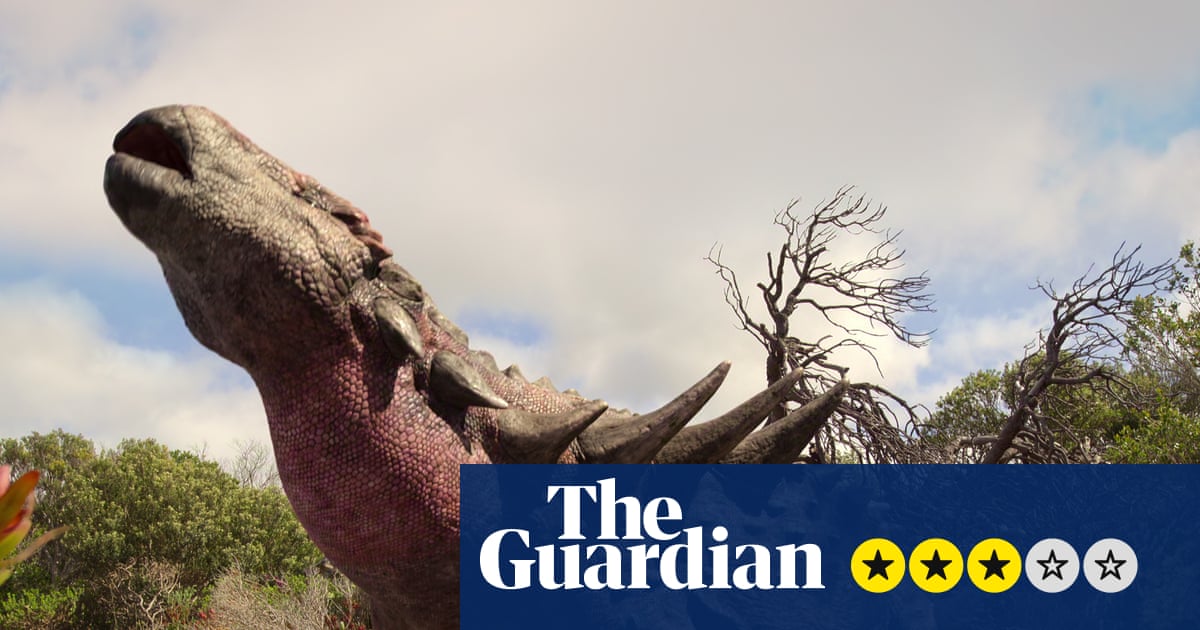
While Morgan Freeman's narration is undeniably the star, The Dinosaurs wouldn't achieve its immersive quality without its breathtaking visual effects. Under the watchful eye of executive producer Steven Spielberg, whose legacy with prehistoric creatures needs no introduction, the series employs lifelike CGI that blurs the line between animation and actual footage. The challenge of making digital dinosaurs feel fresh and believable in an age accustomed to high-budget visual spectacles is considerable, yet The Dinosaurs rises to the occasion.
The series utilizes cutting-edge research to craft pulse-pounding, documentary-like footage of various species in action. From the dust-choked plains of early Pangea to lush, primordial jungles, the environments are meticulously rendered, providing a vivid backdrop for the brutal struggle of existence. We witness not just static models, but dynamic creatures: a pachycephalosaurus clan scurrying away from a T-Rex, the evolution of species avoiding predation, and the relentless march of time and extinction. The visual fidelity is such that viewers can easily suspend disbelief and imagine themselves observing these magnificent beasts directly.
The narrative isn't just a parade of giant monsters; it's an "endless churn of species struggling to establish themselves before being superseded by nastier, toothier new arrivals." This focus on the intricate web of life, death, and evolutionary pressures provides genuine dramatic tension. Each segment, whether detailing a hunting expedition or a family dynamic, feels weighty and significant, contributing to a comprehensive understanding of the prehistoric world. For more on how Spielberg's vision shaped the visual aspects, you might want to read The Dinosaurs Review: Spielberg's Vision & Lifelike Prehistory.
A Journey Through Time: Evolution, Struggle, and Extinction
The Dinosaurs embarks on an ambitious journey, exploring over 100 million years of dinosaur existence, starting 235 million years ago on the vast, supercontinent of Pangea. Initially depicted as dusty and inhospitable, Freeman's intonation of "Saaaandstorms" instantly conjures the harsh reality of this ancient world, a gritty texture almost audible in his voice.
The series masterfully illustrates the concept of evolution, showing how ancient reptiles gave way to the new wave of dinosaurs. A particularly engaging example is the diminutive marasuchus, a tiny underdog whose survival strategy of getting on two legs and running kickstarted a revolutionary evolutionary path. The show has a soft spot for these smaller, often overlooked creatures, humorously comparing them to modern-day turkeys, chickens, and chihuahuas. Yet, in what feels like no time at all – a mere 10 or 20 million years in geological terms – these "critters" evolve into the colossal megabeasts we commonly associate with the dinosaur era.
Beyond individual species, The Dinosaurs provides crucial insight into the overarching themes of prehistoric life: relentless struggle and inevitable extinction. Life, as depicted, is far from relaxing for many creatures. The story is a cyclical narrative of species rising, thriving, and ultimately succumbing to environmental pressures. Climate change, manifested as floods, droughts, ice ages, and further deluges, is portrayed as a constant, unforgiving force, repeatedly wiping the slate clean and restarting the cycle of life. This powerful portrayal offers viewers a visceral understanding of deep time and the planet's dynamic history.
For those interested in the broader scope of prehistoric life cycles and the factors driving these epic shifts, diving into The Dinosaurs: Evolution, Survival, and Prehistoric Drama will offer further insights. The series serves as an excellent educational tool, making complex paleontological concepts accessible and utterly engrossing through its blend of scientific accuracy, stunning visuals, and, of course, that unparalleled narration.
Why The Dinosaurs Stands Out in a Crowded Genre
In an era where every streaming service boasts a library of natural history content, The Dinosaurs achieves a rare feat: it feels fresh and essential. The combination of Steven Spielberg's executive production, the latest CGI technology bringing prehistoric creatures to vibrant life, and Morgan Freeman's captivating narration creates a viewing experience that transcends the typical nature documentary. It’s not just a collection of facts or impressive visuals; it’s an epic saga told with gravitas and artistic flair.
The series addresses the inherent problem of making dinosaur documentaries unique by leaning heavily on its strengths. Freeman's voice isn't just a pleasant accompaniment; it's the anchor that grounds the narrative, making the familiar feel profound and the scientific feel poetic. This artistic choice elevates the show from being merely informative to being truly immersive and emotionally resonant. The critical acclaim, including its impressive standing on Rotten Tomatoes, is a testament to its success in captivating audiences and critics alike. It’s more than just a watch; it's an experience, a journey back to a world both alien and foundational to our own.
Conclusion
Ultimately, The Dinosaurs is a testament to the power of exceptional storytelling, whether through groundbreaking visuals or the timeless resonance of a masterful voice. While the big-budget visual effects deliver on the promise of bringing prehistoric creatures to life with stunning realism, it is Morgan Freeman's narration that truly elevates the series to iconic status. His inimitable style transforms raw scientific data and thrilling CGI into a compelling, almost meditative experience, making the rise and fall of these magnificent beasts feel deeply personal and utterly unforgettable. For anyone seeking an engaging, educational, and deeply immersive journey into Earth's distant past, The Dinosaurs comes highly recommended – a triumph of natural history filmmaking that redefines the genre, making this a truly positive The Dinosaurs Review.