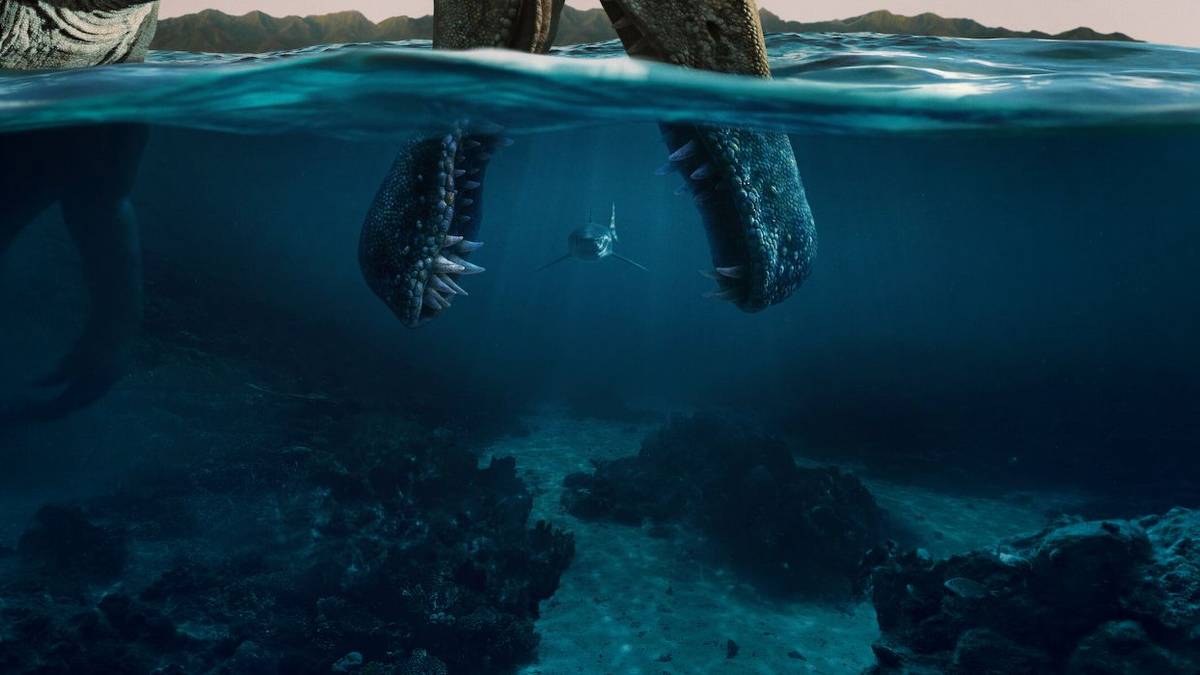
The Dinosaurs Review: Spielberg's Vision & Lifelike Prehistory Unveiled
In a television landscape often saturated with natural history documentaries, capturing genuine awe and delivering fresh perspectives is a monumental challenge. Yet, Steven Spielberg, renowned for his cinematic masterpieces, lends his executive producing prowess to a four-part docuseries that aims to do just that: *The Dinosaurs*. Narrated by the inimitable Morgan Freeman, this Netflix production embarks on an ambitious journey, exploring over 100 million years of prehistoric life with a blend of cutting-edge CGI and compelling storytelling. This isn't just another rehash of familiar beasts; it's a meticulously crafted narrative that explores the intricate dance of evolution, survival, and the relentless forces of nature that shaped the ancient world. Our
The Dinosaurs Review delves into how this series manages to stand out, offering viewers an immersive experience into a world long past, brought vividly back to life.
Spielberg's Vision: Bringing Prehistory to Life with Cutting-Edge CGI
The most immediate and striking aspect of *The Dinosaurs* is its visual fidelity. In an era where audiences are accustomed to big-budget CGI, the series manages to transcend mere spectacle, presenting prehistoric creatures with an uncanny resemblance to real-world wildlife footage. This level of photorealism is a testament to the advancements in visual effects, allowing viewers to witness Pachycephalosaurus clashing heads or a Tyrannosaurus rex lunging from the undergrowth with breathtaking clarity. Spielberg's involvement, even as an executive producer, undoubtedly imbues the series with a cinematic quality, ensuring that each frame is meticulously composed for maximum dramatic impact. The show skillfully avoids the pitfalls of generic nature documentaries by weaving intricate, character-driven narratives around its prehistoric subjects.
One compelling example that immediately grabs attention is the dramatic skirmish between a lone male Pachycephalosaurus fighting for his family unit against a younger, stronger rival. This age-old narrative of dominance and survival, familiar from modern animal shows, is suddenly and brutally interrupted by the familiar, terrifying sight of a T-Rex. The sudden, violent interjection of the apex predator, biting one of the combatants in two, is not just a display of power but a stark reminder of the ever-present danger that defined the Mesozoic Era. The visual effects allow these moments to feel visceral and immediate, placing the viewer directly into the heart of prehistoric drama. It's this combination of familiar narrative arcs with groundbreaking visual effects that truly elevates the series, making it feel less like a documentary and more like a cinematic window into Earth's distant past.
The Unforgettable Voice: Morgan Freeman's Narrative Masterclass
While the visual spectacle of *The Dinosaurs* is undeniable, it's
Morgan Freeman's Narration That Elevates The Dinosaurs Docuseries to an entirely different level. His voice, a soothing balm of gravelly wisdom, has become synonymous with grand storytelling, and in this series, it proves to be the real draw. Freeman's unique delivery, often described as a folk-tale cadence, transforms complex scientific explanations into effortlessly digestible narratives. There's a particular magic in his modulation, often dropping into a deep, satisfied growl on the final syllable of a line, which feels akin to the contented sigh of a sated predator.
This distinctive vocal style creates a captivating juxtaposition: the calming, almost hypnotic quality of his voice against the backdrop of an endlessly violent and chaotic prehistoric world. You could, quite conceivably, use the audio of *The Dinosaurs* as a relaxation tape, despite the constant struggle for survival unfolding on screen. His ability to convey both the immense sweep of geological time and the intimate struggles of individual creatures is unparalleled. Freeman's narration isn't just a guide; it's a storyteller, an ancient elder recounting the epic sagas of forgotten titans. He lends an air of profound gravitas to every birth, every hunt, and every extinction, making the distant past feel intimately connected to our present understanding of life on Earth. His voice is a crucial element that distinguishes *The Dinosaurs* from other documentaries, transforming it into an auditory as well as visual masterpiece.
A Cycle of Survival: Evolution, Drama, and the Relentless March of Time
At its core, *The Dinosaurs* is an expansive narrative about the relentless cycle of life, death, and adaptation. The series meticulously chronicles the "endless churn of species struggling to establish themselves before being superseded by nastier, toothier new arrivals." It all begins 235 million years ago on the supercontinent of Pangea, a dusty, inhospitable expanse where life slowly but surely takes root. Freeman's intonation of "Saaaandstorms" perfectly captures the harsh realities of this primordial landscape, setting the stage for the dramatic
Evolution, Survival, and Prehistoric Drama that unfolds.
The docuseries excels at highlighting the incremental, yet profound, changes that drive evolution. We witness the diminutive Marasuchus, an early ancestor, cleverly avoiding predation by adopting bipedalism and running, a pivotal development that kickstarted the dinosaur lineage. The series champions these "tiny underdogs," drawing parallels between dinkier dinosaurs and modern-day turkeys, chickens, or chihuahuas. However, it's not long – a mere 10 to 20 million years in geological terms – before these smaller critters evolve into the colossal megabeasts we envision today. The narrative skillfully demonstrates how these new waves of life continuously pushed the boundaries of survival, leading to an incredible diversity of forms and behaviors.
Beyond the struggles for dominance among species, *The Dinosaurs* powerfully illustrates the role of larger, existential threats. Climate change, in its various ancient manifestations – floods, droughts, ice ages, and subsequent deluges – serves as a recurring antagonist, periodically wiping the slate clean and forcing life to adapt or perish. This cyclical pattern underscores a profound message: life is resilient, but constantly tested. The series beautifully articulates how the environment continually shapes evolution, providing a valuable lesson in ecological dynamics that remains relevant today.
Beyond the Roar: Accuracy, Insights, and Viewer Experience
One of the commendable achievements of *The Dinosaurs* is its commitment to grounding its spectacular visuals and dramatic storytelling in solid paleontological research. While liberties are taken for narrative flow, the foundational behaviors, anatomical details, and environmental depictions are informed by the latest scientific understanding. This dedication to accuracy ensures that while viewers are entertained, they are also subtly educated about the fascinating world of paleontology. The four-part structure allows for a comprehensive exploration, moving chronologically through the Triassic, Jurassic, and Cretaceous periods, showcasing the distinct life forms and ecological niches that defined each era.
For viewers looking to enhance their experience beyond the visual feast, it's worth paying attention to the subtle evolutionary shifts and ecological interactions that are highlighted. Notice how different species develop specialized traits – from defensive armor to unique hunting strategies – in response to their environment and co-existing predators. The series offers a masterclass in ancient ecology, illustrating how every creature, no matter how small or large, played a vital role in its ecosystem. It’s also an excellent way to introduce younger audiences to the concepts of deep time and evolution, presented in an accessible and engaging format.
Ultimately, *The Dinosaurs* isn't just a visual spectacle; it’s a thoughtfully constructed docuseries that provides genuine insight into the dynamic forces that shaped life on Earth. Its success lies in its ability to marry scientific rigor with a compelling narrative, making the distant past feel immediate and relevant.
Conclusion
*The Dinosaurs* stands as a remarkable achievement in natural history filmmaking. Under Steven Spielberg's executive oversight and elevated by Morgan Freeman's peerless narration, it delivers a viewing experience that is both exhilarating and deeply informative. The series deftly navigates the challenge of making prehistoric life feel fresh and exciting, proving that even a well-trodden subject can offer new revelations when presented with innovation and passion. With its stunning CGI, dramatic storytelling, and commitment to scientific accuracy, it’s far more than just another dinosaur documentary. It's an immersive journey back in time, offering a profound appreciation for the colossal creatures that once roamed our planet and the relentless, awe-inspiring forces that governed their existence. For anyone with even a passing interest in prehistory, *The Dinosaurs* is an absolute must-watch, a definitive entry in the pantheon of paleontological storytelling.