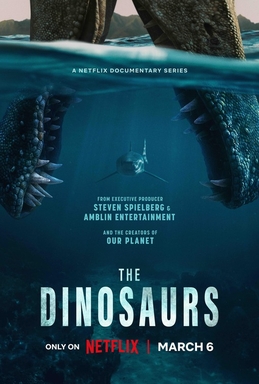
In an era saturated with nature documentaries, each vying for attention with increasingly spectacular visuals and dramatic narratives, it takes something truly exceptional to stand out. Enter The Dinosaurs, a groundbreaking docuseries that redefines what a prehistoric spectacle can be. With the legendary Steven Spielberg as an executive producer and the unmistakable voice of Morgan Freeman guiding us through eons of Earth's past, this four-part series isn't just another rehash of colossal creatures; it's an immersive journey into the very fabric of evolution, survival, and the relentless drama of life itself.
From the moment the opening credits roll, it's clear that The Dinosaurs Review isn't just about showing impressive CGI. While the visual effects are undoubtedly breathtaking – presenting prehistoric creatures with a lifelike fidelity that rivals modern-day wildlife footage – the true triumph lies in its ability to weave a compelling narrative. The series tackles the inherent challenge of making factual shows about the animal kingdom feel fresh, offering a unique blend of scientific accuracy, cinematic flair, and a storytelling prowess that keeps viewers utterly captivated.
Beyond the Visuals: The Narrative Power of The Dinosaurs
The natural history genre often treads familiar ground: awe-inspiring landscapes, intimate close-ups, and the timeless cycles of predation, survival, birth, and death. It's easy for even the most ambitious productions to fall into predictable patterns. Yet, The Dinosaurs manages to sidestep this pitfall by expertly leveraging established tropes, then elevating them with an unexpected depth.
Consider the very first moments: a lone male pachycephalosaurus, the "dome-headed" dinosaur, attempts to assert his dominance over a family unit. This classic "patriarch vs. younger rival" dynamic, common in contemporary animal shows, immediately draws us in. The tension builds as their head-smashing battle unfolds, a primal display of strength and status. But then, in a dramatic twist reminiscent of classic dinosaur thrillers, a Tyrannosaurus rex erupts from the undergrowth, snatching one of the combatants in a sudden, brutal display of power. The surviving pachycephalosaurus clan, led by their relieved patriarch, scurries away as the interloper's skull cracks in the jaws of the apex predator. This sequence, while using familiar narrative beats, is executed with such intensity and visual fidelity that it feels both fresh and profoundly impactful. It's a testament to the series' commitment to not just show, but truly *tell* a story, grounding scientific fact in relatable, high-stakes drama.
The Maestro of Narration: Morgan Freeman's Unforgettable Voice
While the visual spectacle of prehistoric creatures battling for survival is undeniably a major draw, many would argue that the true star of The Dinosaurs is its narrator, Morgan Freeman. His gravelly, folk-tale delivery imbues the scientific narrative with a sense of grand Hollywood epic, transforming dry facts into an enchanting saga. Freeman possesses a unique ability to modulate his voice, often bringing us home in the last half-syllable of a line with a bassy growl – a vocal signature that's as comforting as it is commanding. It's like the satisfied sigh of a sated apex predator, adding a layer of primal satisfaction to every revelation.
Some might suggest his style occasionally borders on self-parody, yet it loses none of its pleasing effect. Indeed, his voice is so inherently soothing and authoritative that one could conceivably use the audio of Morgan Freeman's Narration Elevates The Dinosaurs Docuseries as a relaxation tape – albeit one punctuated by the roars of giant carnivores and the crunch of ancient bones. His narration is not merely a commentary; it's an integral part of the show's identity, weaving a spell that makes the ancient world feel remarkably present and alive.
A Journey Through Time: Evolution and Extinction on Pangea
The Dinosaurs is much more than just a collection of impressive action sequences; it's a deep dive into the relentless evolutionary churn that shaped life on Earth for over 100 million years. The narrative begins 235 million years ago on the vast, initially dusty, and inhospitable supercontinent of Pangea. "Saaaandstorms," intones Freeman, making the word itself sound like a parched whisper from the ancient past, perfectly setting the scene for an unforgiving world.
The series meticulously chronicles the "endless churn of species," a cycle of life struggling to establish dominance only to be superseded by newer, often "nastier, toothier" arrivals. This constant biological arms race is punctuated by cataclysmic environmental shifts – floods, droughts, ice ages, and more floods – highlighting the profound role of climate change in shaping Earth's history. It’s a sobering reminder that extinction is not a singular event, but a recurring theme in the planet's biography.
The dawn of the dinosaurs themselves is presented as an incredible evolutionary leap. We witness the diminutive marasuchus, an ancient reptile, finding its niche by adopting bipedalism, allowing it to run faster and avoid predators. One particularly captivating scene depicts a small marasuchus bravely tiptoeing up to a carcass, snatching a quick meal while a much larger predator naps nearby. These "tiny underdogs" are a favorite motif of the series, drawing comparisons to turkeys, chickens, or even chihuahuas. Yet, in what seems like no time at all – a mere 10 or 20 million years in geological terms – these modest creatures gave rise to the awe-inspiring giants, the megabeasts that Morgan Freeman articulates with a suitable reverence. This epic scale of transformation, beautifully visualized and narrated, is a core strength of The Dinosaurs Review: Spielberg's Vision & Lifelike Prehistory, making it a compelling watch for anyone fascinated by the deep past.
What Makes The Dinosaurs Stand Out? Practical Insights for Viewers and Storytellers
In a crowded documentary landscape, The Dinosaurs truly carves its own niche, offering valuable lessons not just about prehistoric life, but about effective storytelling itself. For viewers, it’s an opportunity to experience natural history in a way that feels both educational and profoundly entertaining. For aspiring storytellers, especially those in the documentary field, it provides a masterclass in overcoming genre fatigue.
- The Power of Narrative Arc: The series doesn't just present facts; it crafts compelling, character-driven stories, even for creatures long extinct. By focusing on individual struggles, family units, and rivalries, it humanizes (or perhaps, "dinosaur-izes") the ancient world, making it relatable.
- The Unifying Force of a Narrator: As evidenced by Morgan Freeman, a strong, distinctive voice can elevate the entire production. His narration acts as a cohesive thread, guiding the audience through complex scientific concepts and vast stretches of time with grace and gravitas.
- CGI as a Storytelling Tool: The lifelike CGI isn't merely for spectacle; it's used to visualize scientific hypotheses, recreate behaviors, and bring long-extinct worlds to life in a believable, pulse-pounding manner. It serves the narrative, rather than overshadowing it.
- Embracing, Not Avoiding, Tropes: Instead of shying away from common documentary clichés, the series embraces them and then subverts or enhances them through unexpected twists, superior execution, and a deeper narrative context.
- Educational Value for All Ages: While thrilling, the series is meticulously researched. It provides a comprehensive, yet accessible, overview of dinosaur evolution, ecological pressures, and the constant dance of life and death, making it an excellent resource for families and students alike.
With Steven Spielberg's involvement as an Executive Producer, the series benefits from a cinematic sensibility that elevates it beyond a typical nature show. It’s a testament to how meticulous research, combined with unparalleled visual effects and a master storyteller at the mic, can create something truly extraordinary.
Conclusion
The Dinosaurs docuseries, available for streaming, is more than just a visual feast of prehistoric life; it's a meticulously crafted narrative experience that delves deep into the evolutionary drama of Earth's most iconic creatures. Through the mesmerizing visual effects, the compelling storytelling of struggle and survival, and the unparalleled gravitas of Morgan Freeman's narration, the series succeeds where many others falter. It breathes fresh life into a well-trodden subject, proving that even millions of years later, the saga of the dinosaurs continues to captivate and educate. A truly essential watch for anyone with a fascination for the ancient world, it confidently earns its place as a standout in any The Dinosaurs Review.